


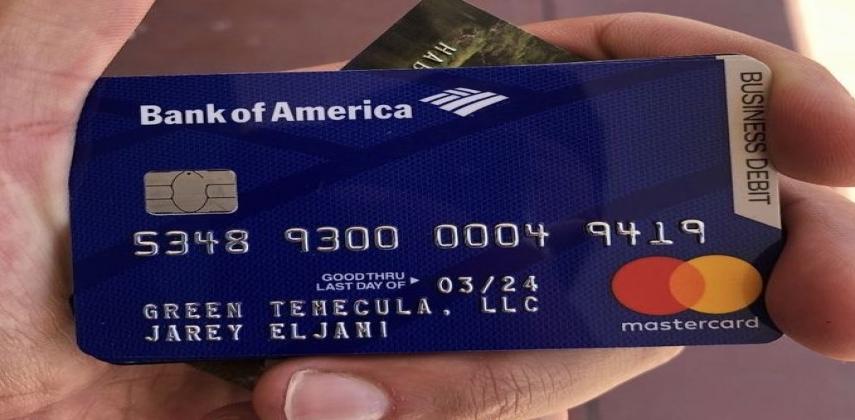
Debit cards are one of the most common ways people in the United States access and spend money from their bank accounts. They can be used for everyday purchases, online shopping, ATM withdrawals, bill payments, and many other transactions.
For someone opening a first checking account, switching banks, or simply looking for a better payment option, choosing the right debit card can make everyday money management easier.
However, not all cards are the same. Different banks and financial institutions can offer different account features, fees, ATM access, transaction limits, security tools, and other services.
In this guide, we will explain USA debit cards, the main types available, their benefits and possible fees, how debit cards work, the difference between debit and prepaid cards, and the important factors to consider when choosing the right card.
A debit card is a payment card generally connected to a checking or savings account at a bank or credit union.
When you use a debit card to make a purchase, the money normally comes from funds available in your account. This is different from a traditional credit card, where you are borrowing against a credit limit.
The Consumer Financial Protection Bureau explains that debit cards generally use money already held in a bank or credit-union account, while credit cards involve borrowing money.
Debit cards can also be used at compatible ATMs to withdraw cash.
The basic process is straightforward.
You open an eligible bank or credit-union account and receive a debit card associated with that account. After activating the card, you can use it for supported transactions.
For example, when purchasing something at a store, you may tap, insert, or swipe your card depending on the payment terminal.
For an ATM transaction, you generally insert or tap your card, enter your PIN, select the required service, and follow the instructions.
The transaction is processed through the card network and financial institution, and the relevant amount is deducted from your available account balance.
There are several ways to categorize debit cards in the United States.
These are debit cards linked to ordinary checking accounts.
They are commonly used for:
Shopping
Online purchases
ATM withdrawals
Bill payments
Everyday expenses
Cashless transactions
Many U.S. banks offer a debit card with their checking accounts.
Credit unions can also provide debit cards connected to eligible accounts.
The exact features, fees, ATM access, and account requirements depend on the individual credit union.
If you are comparing banks and credit unions, look at the complete account terms rather than choosing based only on the card design.
Online banks can provide debit cards even though customers primarily manage their accounts through websites and mobile applications.
These accounts may offer features such as:
Mobile banking
Digital account management
Transaction notifications
Online transfers
ATM access
Direct deposit
The availability of specific features varies by financial institution.
Business banking customers may receive debit cards connected to business checking accounts.
A business debit card can help separate company spending from personal expenses and may provide account-management tools for businesses.
Prepaid cards look similar to debit cards but work differently.
A prepaid card generally is not linked directly to a traditional checking account. Instead, the user loads money onto the prepaid account and spends from that balance.
The CFPB notes that prepaid cards can have different fee structures and features, so consumers should compare the terms before choosing one.
This is an important distinction.
A traditional debit card is connected to a bank or credit-union account.
A prepaid card generally involves money loaded onto the card or prepaid account.
Linked to a bank account
Uses available account funds
Commonly provided with checking accounts
Can provide ATM access
Can be used for everyday purchases
Usually not linked to a traditional checking account
Money is loaded before spending
May have monthly or transaction fees
May offer ATM access depending on the product
Can have different consumer protections and insurance arrangements
The CFPB specifically advises consumers to compare prepaid-card fees and features before choosing one.
Debit cards offer several practical benefits.
Debit cards allow you to pay for products and services without carrying large amounts of cash.
You can use them at participating stores, restaurants, service providers, and other merchants.
One of the biggest benefits of a debit card is the ability to access cash through compatible ATMs.
Your own bank's ATM network may provide lower-cost access, while using another institution's ATM may involve additional fees depending on the account terms.
Many debit cards can be used for online purchases where the merchant accepts the relevant card network.
This makes debit cards useful for subscriptions, shopping websites, digital services, travel bookings, and other online transactions.
Because debit cards normally use money from an associated account, they can be useful for people who prefer not to use traditional credit for everyday spending.
However, account overdraft settings can affect how transactions are handled.
Many U.S. checking accounts support direct deposit.
This allows employers and other eligible organizations to send money electronically to your bank account instead of providing a physical check.
The CFPB notes that bank accounts can support direct deposit and debit-card access as part of everyday banking.
Modern bank accounts commonly provide mobile or online banking tools that can help customers monitor balances and transactions.
Some financial institutions also offer transaction alerts and card-management controls.
Debit cards can reduce the need to carry cash for everyday purchases.
This can be especially useful for people who frequently shop online or use merchants that primarily accept card payments.
Not every debit card has the same fee structure.
Depending on the bank and account, possible costs may include:
Monthly maintenance fees
ATM fees
Out-of-network ATM fees
Foreign transaction fees
Replacement-card fees
Certain account service fees
Overdraft-related fees
Some accounts may waive certain fees if specific requirements are met, such as maintaining a minimum balance or receiving qualifying direct deposits.
The FDIC's recent consumer research found that most banks in its survey offered a debit card with their basic transaction account, and many included it at no additional cost, while some charged a fee.
Because fees can change, always check the current fee schedule before opening an account.
An ATM fee is a charge that can apply when you use an ATM under certain circumstances.
For example, your bank may provide free access to its own ATM network but charge a fee for certain out-of-network transactions.
The ATM operator may also charge its own fee.
Before completing a transaction, check the ATM screen for any displayed fee and review your bank's terms.
An overdraft can happen when there is not enough money in an account to cover a transaction and the financial institution pays the transaction anyway.
The CFPB explains that overdrafts can result in the customer owing the amount that was overdrawn and potentially paying an overdraft fee.
Some account options are designed to reduce overdraft risk by declining transactions when sufficient funds are unavailable.
If avoiding overdraft fees is important to you, ask the bank about its overdraft policies before opening an account.
Choosing a debit card should be about more than finding a card with attractive features.
Consider the following factors.
Check whether the account has a monthly maintenance fee.
Also check whether that fee can be waived by meeting certain requirements.
Consider how easy it will be to find fee-free or low-cost ATMs.
If you regularly withdraw cash, ATM availability can make a significant difference.
A good mobile or online banking experience can make it easier to:
Check your balance
Review transactions
Transfer money
Manage payments
Monitor account activity
Security notifications can help you identify transactions that you do not recognize.
If available, consider enabling alerts for card purchases, ATM withdrawals, transfers, and other important account activity.
If you travel internationally, check whether the card charges foreign transaction fees or has other international-use restrictions.
Some debit cards and accounts have limits for purchases or ATM withdrawals.
If you expect to make larger transactions, check these limits in advance.
Some checking accounts may have requirements related to:
Minimum opening deposits
Minimum balances
Direct deposits
Monthly activity
Identity verification
Compare these requirements with your own banking needs.
Debit card security should always be a priority.
Because a debit card can be connected directly to your bank account, unauthorized access can potentially affect your available funds.
Here are some basic safety practices.
Never share your debit-card PIN with another person.
Do not write the PIN on the card.
Check your bank account regularly.
If you notice a transaction you do not recognize, contact your financial institution using an official contact method.
Scammers can pretend to represent banks and ask customers for card numbers, PINs, passwords, or verification codes.
A legitimate bank representative should not require you to reveal sensitive authentication information through an unexpected message or suspicious link.
Avoid posting photographs of your debit card online.
Do not unnecessarily share your card number, security code, PIN, or account credentials.
If your card is lost or stolen, contact the financial institution as soon as possible.
The CFPB advises consumers to act promptly when a card is missing or when unauthorized charges are discovered.
U.S. consumers have certain protections relating to unauthorized electronic transactions, but the details can depend on the circumstances and how quickly the customer reports the problem.
For that reason, monitoring your account and reporting suspicious transactions quickly is important.
If you believe someone has obtained your card information, contact your bank through its official website, mobile app, or customer-service number.
Debit cards are widely used for online purchases.
When shopping online, look for established merchants and make sure you are entering your information on the correct website.
Before completing a purchase:
Verify the website address
Check the final price
Review shipping costs
Avoid suspicious payment pages
Never share your PIN with an online merchant
Monitor your account after the transaction
For additional security, some financial institutions provide virtual-card or card-control features, although availability varies.
A debit card can be useful when traveling within the United States or internationally.
Before traveling, consider checking:
ATM availability
International transaction fees
Foreign currency conversion
Daily ATM limits
Purchase limits
Card expiration date
Bank contact information
It is also a good idea to have a backup payment method in case your primary card is lost, blocked, or unavailable.
Debit cards and credit cards are not the same.
A debit card normally uses money already available in your bank account.
A credit card provides access to borrowed funds up to an approved credit limit, which you generally repay later.
The CFPB describes debit and prepaid cards as spending methods that generally use money you already have, while credit cards involve borrowing.
Neither option is automatically best for everyone. The right choice depends on your financial habits, goals, and the terms of the specific card.
Cash can be useful, but debit cards provide additional convenience.
With a debit card, you can often:
Pay online
Shop in stores
Withdraw cash
Track transactions electronically
Receive banking alerts
Manage spending through an app
However, keeping a small amount of emergency cash can still be useful when a merchant does not accept cards or when electronic payment systems are unavailable.
Debit cards can be used safely when customers follow good security practices.
The most important steps include:
Protecting your PIN
Using trusted payment websites
Monitoring transactions
Reporting suspicious activity
Keeping your phone and banking app secure
Avoiding suspicious links
Contacting your bank quickly if your card is lost
Security also depends on the bank, account, card network, and specific protections associated with the product.
Before choosing a debit card, create a simple checklist:
Fees: Are monthly and transaction fees reasonable?
ATM access: Can you easily find compatible ATMs?
Mobile banking: Is the banking app convenient?
Security: Are transaction alerts and card controls available?
Online payments: Does the card work for the websites and services you use?
International use: Can you use it when traveling?
Limits: Are purchase and ATM limits suitable for your needs?
Account requirements: Can you comfortably meet the account's requirements?
Comparing these factors can help you avoid choosing a card based only on advertising or appearance.
Traditional bank debit cards linked to checking accounts are among the most common types. Banks and credit unions may offer different account and card options.
Many debit cards can be used for online purchases at participating merchants. Availability depends on the card, network, merchant, and account settings.
Not necessarily. A debit card may work at many compatible ATMs, but fees, network restrictions, and availability can vary.
Some bank accounts include a debit card without a separate card fee, while other accounts may charge fees. Always review the current account terms.
No. A traditional debit card is generally linked to a bank or credit-union account, while a prepaid card generally uses money loaded onto a separate prepaid account.
No. A debit card generally uses your existing funds, while a credit card involves borrowing money that must be repaid.
Contact your financial institution immediately through an official channel, report the card as lost or stolen, and follow the bank's instructions for securing your account.
USA debit cards provide a convenient way to access and spend money held in a bank or credit-union account. They can be used for everyday purchases, online shopping, ATM withdrawals, and other financial transactions.
However, the best debit card depends on your personal banking needs.
Before choosing one, compare the account's fees, ATM network, transaction limits, online banking tools, security features, international-use policies, and account requirements.
It is also important to remember that debit cards, credit cards, and prepaid cards are different financial products. Understanding these differences can help you select a payment method that fits your spending habits.
Finally, always check the latest terms directly with the bank or financial institution before opening an account, because fees, features, eligibility requirements, and card policies can change over time.